University of British Columbia
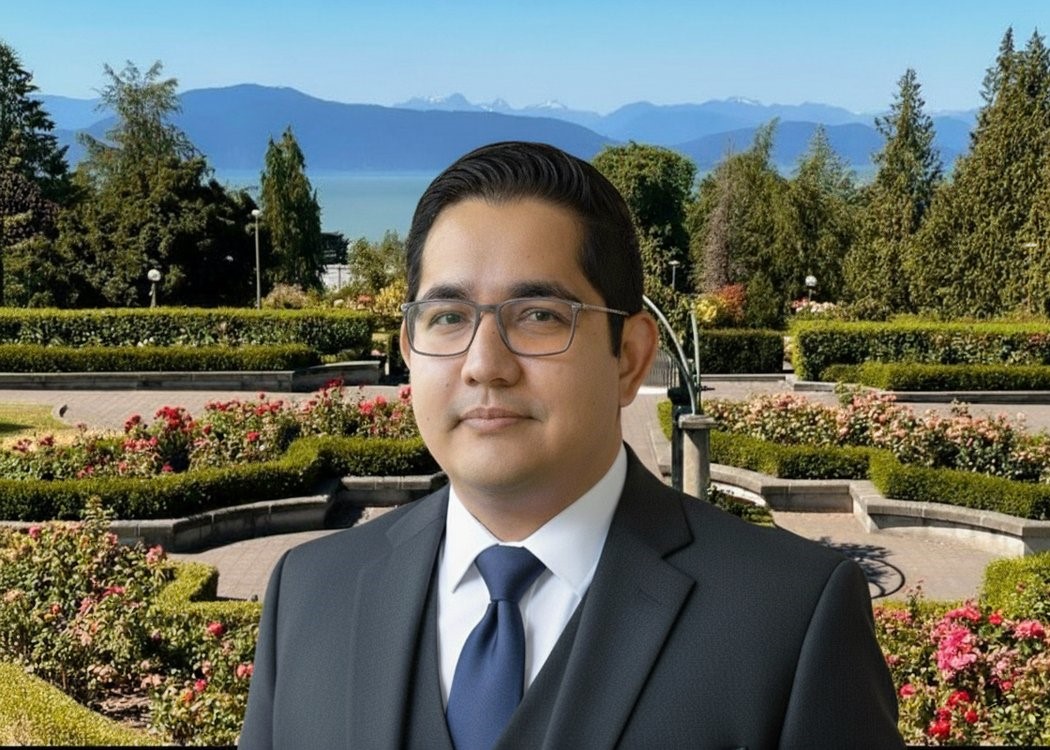
M. Ehsan Karim
Associate Professor in Health Data Science
- School of Population and Public Health, University of British Columbia
- Scientist, Centre for Advancing Health Outcomes, St. Paul’s Hospital
- Associate Member, UBC Department of Statistics
He develops causal inference and machine learning methods that turn large health administrative databases into reliable real-world evidence.
- Peer-reviewed publications
- 140+
- PI research funding
- $1.32M
- Trainees supervised
- 36
- Invited presentations
- 58
- Books & open textbooks
- 6
- Citations
- 2,700+
About
Dr. M. Ehsan Karim is an Associate Professor in Health Data Science in the School of Population and Public Health at the University of British Columbia, a Scientist at the Centre for Advancing Health Outcomes (St. Paul’s Hospital), and an Associate Member of UBC Statistics. He held a Michael Smith Health Research BC Scholar Award from 2018 to 2023 and was promoted to Associate Professor with tenure in July 2025.
He earned his PhD in Statistics from UBC, supported by an MS Canada studentship, and completed postdoctoral training in epidemiology and biostatistics at McGill University with a fellowship from the Canadian Network for Observational Drug Effect Studies (CNODES).
His research program develops and applies causal inference and machine learning methods to answer real-world comparative effectiveness questions from non-randomized data, with a central focus on large health administrative databases and multiple sclerosis as a key application area. An advocate for open education, he authored the open-access textbook Advanced Epidemiological Methods, teaches UBC’s PhD capstone methods course, and was named a UBC OER Champion for 2024–2025.
News & Highlights
-
2026–2031
Co-principal investigator on a new five-year CIHR Project Grant ($794,990) that uses target trial emulation to evaluate novel prescribing practices for opioid use disorder in the context of a volatile drug supply.
-
Jun–Sep 2026
Posted ten new methods preprints on arXiv, spanning survey-weighted and adaptive TMLE, target trial emulation for time-varying treatments, plasmode simulation benchmarks, and a guide reconciling AIPW, TMLE, and double machine learning for applied researchers.
-
Mar–Jul 2026
Published a single-author invited review on prescription time-distribution matching and immortal time bias in Current Opinion in Epidemiology and Public Health, and a book chapter on effect modification in non-randomized studies; a study evaluating TMLE for survival outcomes was accepted in the Journal of Statistical Research.
-
June 2026
Gave invited UBC seminars on AI in health research: “When AI Sounds Right but Gets Research Wrong” at the Centre for Health Services and Policy Research, and “Who Needs a Statistician Anymore?” at the School of Population and Public Health.
-
May–Jun 2026
Taught the “AI and LLMs — Research Perspective” workshop (62 participants) at the Statistical Society of Canada Annual Meeting in Hamilton, where he also organized a session on advances in causal inference and gave invited talks on TMLE variants and on modernizing biostatistics education.
-
2026–2027
Awarded a UBC OER Affordability Grant ($24,996) to develop Health Data Science in the AI Era, an open educational resource for reproducible research and knowledge translation.
-
July 2025
Promoted to Associate Professor with tenure, UBC School of Population and Public Health.
Research Themes
-
Causal Inference Methods
Develops and evaluates methods for estimating treatment effects from non-randomized data — including targeted maximum likelihood estimation (TMLE) with single and double cross-fitting, marginal structural models, propensity score approaches, and target trial emulation. His work tackles time-dependent confounding, treatment-confounder feedback, and immortal time bias in longitudinal studies, and benchmarks estimators with plasmode simulations built from real health data.
-
Machine Learning & AI for Health
Investigates when machine learning genuinely improves causal estimation — from Super Learner weight estimation to deep-learning propensity score architectures such as Dragonnet and autoencoders. The goal is rigorous, verifiable use of AI in health research rather than black-box prediction.
-
Real-World Evidence & Pharmacoepidemiology
Advances the methodology of real-world evidence generation, including high-dimensional propensity score (hdPS) techniques and their machine learning and doubly robust extensions for residual confounding control. This program also addresses non-adherence and per-protocol effects in pragmatic clinical trials. He is co-principal investigator of a CIHR-funded program of target trial emulations evaluating prescribing practices for opioid use disorder with linked British Columbia administrative data.
-
Health Administrative Data
Builds statistical strategies for the scale and messiness of population-level administrative databases — proxy adjustment, missing data, survival prediction, and disease-specific comorbidity indices — so routinely collected health data can support trustworthy inference.
-
Multiple Sclerosis Applications
Applies these methods where they matter: comparative effectiveness of MS therapies, an MS-specific Comorbidity Summary Index (MSCSI), and a risk prediction algorithm for the MS prodrome to enable earlier detection. Supported by CIHR and MS Canada.
-
Survey & Longitudinal Methods
Develops guidance for analyzing nationally representative complex surveys (Canadian, US, and international) and longitudinal cohorts, including propensity score analysis and design-based, survey-weighted TMLE in the complex survey context, and small-sample inference for stepped-wedge designs.
Funded by Canadian Institutes of Health Research (CIHR) · Natural Sciences and Engineering Research Council of Canada (NSERC) · MS Canada · Michael Smith Health Research BC · BC SUPPORT Unit
Selected Publications
A selection from 140+ peer-reviewed articles spanning causal inference methodology, machine learning for health, and high-impact applied work.
140+ peer-reviewed publications · 2,700+ citations · h-index 27 (citations and h-index: Google Scholar, October 2026)
141 peer-reviewed journal articles (one in press), plus 16 refereed conference proceedings.
View all on Google Scholar →Books & Software
Books, open textbooks & chapters
- Advanced Epidemiological Methods Karim ME and the Epi-OER team, 2024 Open · Free
- Scientific Writing for Health Research Karim ME, Jeong D, Yusuf F, 2021 Open · Free
- Understanding Propensity Score Matching Karim ME, 2021 Open · Free
- Understanding Basics and Usage of Machine Learning in Medical Literature Karim ME, 2021 Open · Free
- R Guide for TMLE in Medical Research Karim ME, Frank H, 2021 Open · Free
- R Graph Essentials Packt Publishing, 2013 · ISBN 9781782165460 Videobook
- Effect Modification in Non-Randomized Studies: Methods and Applications with Propensity Scores Karim ME, Chapter 8 in Comparative Effectiveness and Personalized Medicine Research Using Real-World Data (eds. Debray, Nguyen & Platt), 2026 Book chapter
Research software
- svyTable1 Survey-weighted descriptive statistics and diagnostic tables R package · 2025
- ReSliceTMLE Resampling-based targeted maximum likelihood estimation R package · 2025
- TB Mortality Risk Calculator Mortality risk prediction for people diagnosed with TB R Shiny app · 2024
- Crossfit Sample splitting (cross-fit) for TMLE in causal inference R package · 2023
- simMSM / genMSM / iptw Simulation and weighting tools for marginal structural models R & Stata · 2020
Teaching
-
SPPH 604 — Application of Advanced Epidemiological Methods
Developer & sole instructor · PhD level · 3 credits
UBC’s PhD capstone methods course, developed by Dr. Karim and taught since 2018 to more than 100 doctoral students. Covers causal inference, propensity scores, mediation analysis, machine learning, survey data analysis, and missing data — with hands-on tutorials that extend it to 65 contact hours (versus the standard 39), bridging the methodological gap for SPPH doctoral trainees.
-
SPPH 381H — Health Data Science: AI and Knowledge Translation
Developer · Undergraduate
A comprehensive toolkit for applying data science to health research, featuring “Zero to AI Co-Pilot” pedagogy, a verification-first assessment framework for auditing AI-generated code, and OCAP®/CARE integration for Indigenous data sovereignty.
-
MEDI 504A — Emerging Topics in Experimental Medicine
Co-instructor · Graduate · 1.5 credits · 2021–2022
Part of a Faculty of Medicine health data science initiative, spanning multi-omics, machine learning and AI in clinical research, and large administrative datasets in population health.
Open education
Most of Dr. Karim’s course content is published as Open Educational Resources, freely available to UBC students and a global audience — including the Advanced Epidemiological Methods textbook and the Health Data Science: AI and Knowledge Translation course materials. His OER work has been supported by UBC OER Fund Implementation and Affordability Grants (~$50,000).
Recognition
- AMS UBC OER Champion Award, 2024–2025 — recognizing open educational resource contributions
- Faculty of Medicine Merit Awards (teaching, research and service), four consecutive years, 2021–2024
- More than a dozen conference workshops and webinars delivered nationally and internationally, from SER and the Statistical Society of Canada to R/Medicine
Trainees & Mentorship
Supervision status · in effect since October 2026
Not accepting new students
Dr. Karim has reached his supervision capacity and is not accepting new students until further notice.
This applies to all prospective graduate students — master’s and doctoral — in the School of Population and Public Health and the Department of Statistics, including visiting graduate students. Any change will be posted on this page.
Please do not send supervision inquiries in the meantime — because of their volume, he is unable to respond to them individually. Prospective applicants are encouraged to consult the School of Population and Public Health’s guidance on finding a supervisor (PhD, MSc) and the Department of Statistics graduate admissions page to identify other potential supervisors.
- Graduate students
- 22
- Postdoctoral fellow
- 1
- Undergraduate trainees
- 13
Dr. Karim has supervised graduate students in both the School of Population and Public Health and the Department of Statistics, building their skills in data science, causal inference, and health analytics. His trainees’ theses span machine learning for survival prediction, the multiple sclerosis prodrome, comorbidity index development, and methods for pragmatic trials — and former trainees have gone on to positions at Harvard, McGill, McMaster, and the BC Centre for Disease Control.
Funding & Awards
CAD $1.32M in research funding as principal investigator since 2017, plus $1.59M as co-principal investigator on two CIHR grants.
| Funder · Program | Years | Project | Amount |
|---|---|---|---|
| CIHR · HIV/AIDS & STBBI Clinical Trials Research Network, Phase 2 · Co-PI | 2025–2029 | Skills Training for Real-world InterVention Evaluation in STBBIs (STRIVE-STBBI) | $800,000 |
| CIHR · Project Grant · Co-PI | 2026–2031 | Target trial emulations of novel prescribing practices for opioid use disorder in the context of a volatile drug supply | $794,990 |
| Michael Smith Foundation for Health Research · Scholar Award | 2018–2023 | A causal inference framework for analyzing large administrative health care databases, with a focus on multiple sclerosis | $450,000 |
| MS Canada · Discovery Research Grant | 2023–2026 | Development and validation of the Multiple Sclerosis-specific Comorbidity Summary Index (MSCSI) | $199,859 |
| CIHR · Project Grant | 2024–2025 | A risk prediction algorithm for prodromal multiple sclerosis | $153,000 |
| NSERC · Discovery Grant | 2018–2025 | Improving causal inference methods in statistics for analyzing big data | $126,000 |
| BC SUPPORT Unit · Real-World Clinical Trials Methods Cluster | 2018–2021 | Developing and evaluating causal inference methods for pragmatic trials | $100,000 |
| MS Canada · Catalyst Research Grant | 2024–2026 | Reducing residual confounding in MS research: a machine learning approach | $29,976 |
Selected awards & distinctions
- Michael Smith Foundation for Health Research Scholar Award, $450,000 (2018–2023)
- AMS UBC OER Champion Award (2024–2025)
- Faculty of Medicine Merit Award, UBC — four consecutive years (2021, 2022, 2023, 2024)
- First-authored article named among the top 10 “2014 Articles of the Year” in the American Journal of Epidemiology — Society for Epidemiologic Research (2015)
- Editorial Contribution Award and Author Service Award, BMC Medical Research Methodology (2025)
- Exemplary Reviewer (top 20), Epidemiology (2020)
- Best Reviewer, Pharmacoepidemiology and Drug Safety (2015 and 2017)
- Outstanding Academic Performance Award, UBC Faculty of Medicine (2019, 2020)
Service
Editorial roles
- Associate Editor, Pharmacoepidemiology and Drug Safety (2025–present)
- Editorial Board Member, BMC Medical Research Methodology (2024–2025)
- Associate Editor, Journal of Statistical Research (2020–present)
Peer review
Reviewer since 2013 for more than 60 journals in biostatistics, epidemiology, and public health (over 200 completed reviews) — including Biometrics, Statistics in Medicine, Epidemiology, American Journal of Epidemiology, and BMJ. Recognized as Exemplary Reviewer (Epidemiology, 2020) and Best Reviewer (Pharmacoepidemiology and Drug Safety, 2015, 2017).
Grant review
CIHR Project Grant committees (2023–2025) and College of Reviewers (2024–2028) · NSERC Discovery Grants, Mathematics and Statistics (2018–2024) · MS Canada · Dutch Research Council (NWO) · MS Research Australia · Health Research Council of New Zealand · Fonds de recherche du Québec.
Conference leadership
Frequent chair and organizer of sessions on causal inference and machine learning at JSM, the Statistical Society of Canada (every year since 2023), CSEB, and ICSA-Canada, and a member of the Scientific Committee for the 2027 CSEB Conference in Ottawa.
Contact
Dr. Karim is not accepting new students and is unable to respond to supervision inquiries (see the supervision notice). For all other matters, email is the fastest way to reach him.
Mailing address
School of Population and Public Health, UBC216 – 2206 East Mall
Vancouver, BC V6T 1Z3, Canada